When the Forest Falls Silent
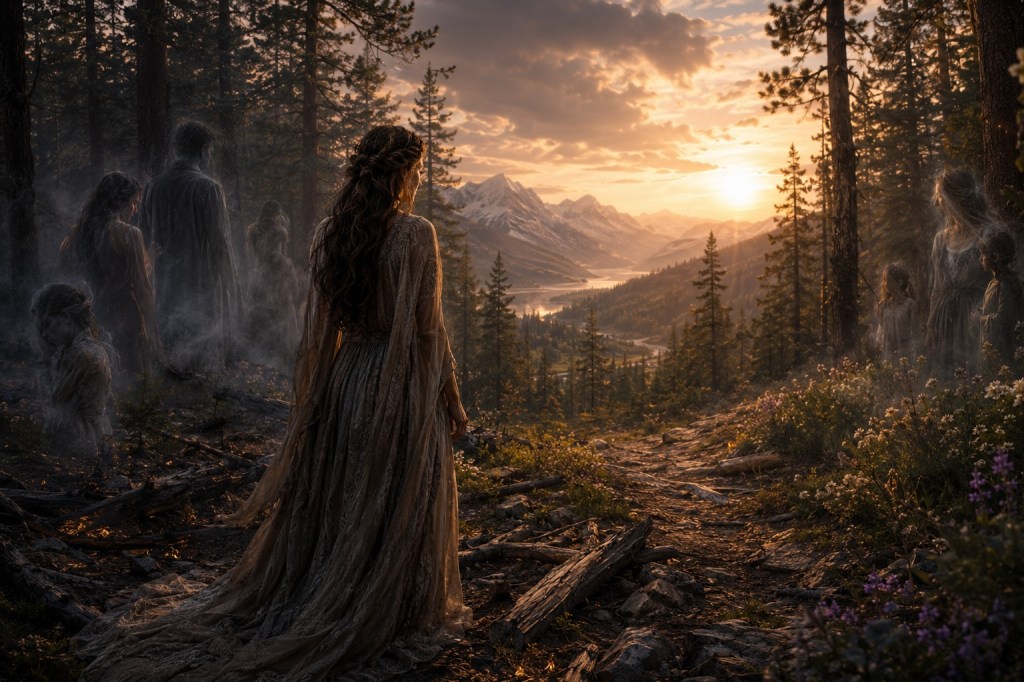
There is a moment after every storm when the forest seems still enough to believe the disturbance has passed. It is often in that silence that the next season begins.
We imagine that once the misunderstanding has been untangled, the apology has been offered, the truth spoken aloud, and the ghosts finally asked to leave, peace will settle in behind them. We expect the nervous system to recognize that the danger has passed, loosen its grip, and return us to solid ground. Sometimes it does, and sometimes it takes the scenic route.
Over the past several months, our relationship has slowly found its way back to itself. Conversations that once felt impossible have become invitations instead of battlegrounds. We have laughed more, listened differently, and discovered how easily two people can inhabit entirely different realities while believing they are standing beneath the very same sky. We spent a few days together in Montana, where towering mountains, open valleys, and quiet forests seemed to remind us that landscapes are not the only things capable of weathering difficult seasons. For the first time in a long while, it felt as though we were meeting one another again rather than simply remembering who we used to be.
The ghosts that had once stood between us had begun to fade. At least, that is what I believed. What I have come to learn is that ghosts are reluctant travelers. They rarely disappear altogether. More often, they simply find a new place to live.
In my last blog, I wrote about the ways we dress the living in the unfinished stories of those who came before them. I explored how projection can quietly cast someone into a role they never auditioned for and how curiosity can become the thread that leads us back to the person standing in front of us. There was grief in that realization, but there was also hope. Seeing the living instead of the ghosts changes a relationship in ways that are both profound and humbling.
What I did not yet understand was that ghosts have a curious habit of changing hosts.
While one nervous system was learning to lay down the stories it had carried for years, mine had quietly begun collecting stories of its own. Somewhere between uncertainty and repair, my body learned to remember unanswered questions more vividly than answered ones, silence more readily than reassurance, and ambiguity more deeply than clarity. It remembered how suddenly solid ground had once disappeared beneath my feet and quietly resolved, without ever asking my permission, that it would never trust the earth quite so completely again.
I know now that what I was carrying has a name. Therapists call it an attachment injury. It is the wound left behind when safety fractures within a relationship that once felt like home. The injury is not defined solely by what happened. It is shaped by what the body learned while it was happening.
Long before psychology gave us language for attachment, implicit memory, or the nervous system, the ancient Greeks spoke of Mnemosyne, the goddess of memory. She was not simply the keeper of the past. She was the mother of the Muses, reminding us that every story we tell, every meaning we make, and every truth we believe is born from what memory chooses to preserve. Memory is never a passive archive. It is an active storyteller, quietly editing the world through the lens of what once helped us survive.
Our nervous systems seem to understand her well. They do not simply remember events. They remember what those events felt like: a pause before an answer, a conversation left unfinished, the absence of reassurance when reassurance was desperately needed. Long after the mind has accepted that the danger has passed, the body continues listening for echoes that no longer belong to the present.
Perhaps that is why healing can feel so disorienting. Sometimes the person who once saw ghosts finally learns to see you clearly, only to discover that, in the meantime, your own nervous system has begun carrying ghosts of its own. Those ghosts ask a different question. They are no longer wondering whether someone sees you for who you are. They are quietly asking whether it is finally safe to believe that they do.
When the Hearth Goes Cold
There are moments that change a relationship, and then there are moments that change the body. The two are not always the same. A relationship can weather disagreement, disappointment, and even seasons of distance while remaining fundamentally intact. Yet sometimes a single experience quietly teaches the nervous system something it cannot easily forget.
The moment is not always dramatic. More often, it is defined by what never fully happened. A conversation ends without resolution. A question lingers unanswered. Silence stretches longer than the heart knows how to bear. It is within those undefined spaces that the nervous system begins writing stories of its own.
Looking back, I can see that my deepest wound was never created by conflict itself. Conflict is an inevitable part of every close relationship. The injury emerged in the absence of clarity. A single word carried one meaning for one person and an entirely different meaning for the other. One heart believed it was asking for room to breathe, while the other believed it was being asked to prepare for goodbye. The distance between those two realities was only a few words, yet those words never arrived. In their absence, my mind did what frightened minds have always done. It finished the story itself.
The human imagination is one of our greatest gifts. It allows us to create art, imagine possibilities, and dream of futures that have never existed. Yet fear has a remarkable ability to borrow that same imagination for its own purposes. When certainty disappears, imagination often stops creating possibilities and begins manufacturing conclusions. It fills unanswered questions with explanations that feel convincing, not because they are true, but because they seem most likely to protect us from being caught off guard again.
The nervous system has never been particularly interested in accuracy. It has always been interested in survival.
Before psychology gave us language for attachment injuries, the ancient Greeks honored Hestia, goddess of the hearth. While other gods ruled seas, storms, and battlefields, Hestia tended the quiet fire at the center of the home. Her flame symbolized belonging, refuge, and the certainty that no matter how far one wandered, there remained a place to return to. The hearth was more than warmth. It was the emotional center of home itself, answering one of the oldest questions the human heart can ask: Am I still welcome here?
An attachment injury feels remarkably similar to standing before that familiar hearth and wondering whether the fire has gone out. No one may have asked you to leave. No one may even want you to leave. Yet something inside begins questioning whether home is still home. The body, unable to tolerate uncertainty, quietly prepares itself for exile long before anyone has opened the door.
As I have reflected on those days, I have realized that my greatest pain did not come from what was said. It came from what remained unsaid. I longed for clarity while my nervous system quietly interpreted ambiguity as danger. Without realizing it, my body concluded that if safety could disappear once without warning, it could disappear again. It began scanning every silence, every pause, and every unanswered question for signs that history was about to repeat itself.
That is the peculiar nature of attachment injuries. They rarely announce themselves through dramatic declarations. Instead, they settle into the background of our awareness, gently encouraging vigilance in places where we once felt peace. They persuade us that remaining on guard is wisdom, that anticipating loss is maturity, and that preparing for disappointment is simply being realistic.
It took me a long time to recognize that these instincts were not expressions of wisdom at all. They were expressions of fear. Fear has an extraordinary ability to disguise itself as discernment, convincing us that hypervigilance is insight and that self-protection is clarity. Yet the two are not the same. Discernment opens us to reality as it is. Fear narrows our vision until every shadow begins to resemble the last place we were hurt.
The Space Between Words
I have replayed those days in my mind more times than I could ever count, not because I wanted to relive them, but because that is what frightened nervous systems often do. They return to moments that felt unfinished, hoping that if they walk the path enough times, they might finally discover the sentence that would have changed everything.
It was not the conflict that lingered. It was the uncertainty.
I have often wondered how differently those days might have unfolded if just a few more words had been spoken. There is an extraordinary difference between needing space and wanting separation, yet when fear is already standing at the door, the nervous system rarely pauses to consider nuance. It hears the first possibility that sounds like danger and quietly begins preparing for it as though it has already become reality.
Looking back, I realize that my greatest suffering came from trying to survive a future that had not yet happened. My mind became consumed with filling the silence, searching for meaning in every pause and every unanswered question. The stories it created felt painfully real because fear has never required evidence to become convincing. It simply requires enough uncertainty to begin writing its own ending.
There was one realization that took me much longer to admit, perhaps because it felt too vulnerable to say out loud. Beneath the grief, beneath the confusion, and even beneath the fear was a quieter wound that had almost gone unnoticed. More than anything, I wanted to know that I mattered. I wanted reassurance that what we had built together was worth protecting, that I was worth reaching for, and that if everything seemed to be unraveling, someone would still choose to move toward me rather than away from me.
Those longings are not signs of weakness. They are among the oldest needs carried by the human heart. We all hope that when we become frightened, someone will help us find our way back instead of leaving us to wander the darkness alone.
For a long time, I interpreted what happened through only one lens. If someone did not reach for me, I assumed they must not want me. If they grew quiet, I believed they had already begun leaving. It seemed like the only explanation that made sense.
Healing, however, has a curious way of inviting us to ask better questions.
Rather than asking why someone did not fight harder for me, I slowly found myself wondering what was happening inside them that made surrender feel safer than reaching. What fear had convinced them that silence was protection? What burden had become so heavy that retreat felt more merciful than closeness? Those questions did not erase my pain, nor did they excuse the ways we had hurt one another. They simply reminded me that every nervous system has its own language for surviving, and those languages often sound foreign until we learn how they were first spoken.
The Greeks told us that Ariadne’s thread could lead someone safely through the labyrinth, but they never suggested that stepping out of the maze meant the journey was finished. Leaving the labyrinth is not the same as trusting the world beyond it. Even after we find the path home, our bodies sometimes keep glancing over their shoulders, half expecting the walls to rise again.
Perhaps that is the quieter work of healing: not merely finding our way out of the labyrinth, but slowly teaching the body that it no longer has to live as though it is still inside it.
The Slow Return of Trust
One of the greatest misconceptions about healing is that insight changes everything. While understanding ourselves can illuminate the path ahead, the nervous system rarely moves at the same pace as the mind. We often imagine that once we identify the pattern, name the attachment injury, or finally make sense of the story, our bodies will eagerly follow. Instead, we discover that understanding is often only the beginning. The mind may recognize that the danger has passed while the body continues scanning the horizon, waiting for it to return.
That was certainly true for me. My mind could see that our relationship had changed well before my nervous system believed we were safe again. There was more laughter than silence, more curiosity than defensiveness, and more moments of genuine connection than I had experienced in a long time. Looking from the outside, someone might have concluded that everything had been repaired. Yet healing has never been measured by what happens during our best moments. It reveals itself in the ordinary ones, when nothing is obviously wrong and the body quietly decides whether it can finally stop bracing for what might happen next.
Those ordinary moments became my greatest teachers. A delayed response, a conversation that needed to wait until later, or a subtle shift in tone could awaken echoes that had nothing to do with the present. Before I had the chance to ask what was actually happening, my nervous system had already begun preparing for what it feared was about to happen. The body was responding to memory before the mind had gathered enough evidence to respond to reality.
That is the quiet nature of an attachment injury. It does not simply teach us to remember pain. It teaches us to anticipate it. The nervous system begins rehearsing tomorrow’s grief before tomorrow has even arrived, believing that constant vigilance might soften the blow if history repeats itself. Yet anticipation rarely protects us from suffering. More often, it invites suffering into moments that have not yet earned it, asking us to grieve possibilities rather than respond to realities. Fear begins masquerading as wisdom, convincing us that remaining on guard is the same thing as remaining safe.
The ancient Greeks gave us the story of Penelope, whose quiet faithfulness is often overshadowed by Odysseus’ long voyage home. While he wandered the seas, she remained in Ithaca, weaving by day and secretly unraveling her work each night. To those watching from the outside, it appeared as though nothing was changing. Yet every thread she wove and unwove became an act of patient endurance, creating space for truth to arrive in its own time. Her story reminds me that progress is not always visible. Sometimes the work that appears repetitive is actually the work that preserves hope.
Healing has often felt remarkably similar. There were days when trust seemed to return with surprising ease, followed by mornings when an unexpected memory unraveled what I believed had already been repaired. I questioned whether I was moving backward, whether all the growth we had experienced had somehow disappeared overnight. Yet forests have never measured their recovery by a single season, and perhaps we were never meant to measure ourselves that way either.
A forest recovering from fire does not awaken one morning fully restored. Beneath the ash, roots slowly test the soil before sending out fragile shoots that will eventually become part of the canopy once again. Some new growth flourishes immediately, while other seedlings retreat, waiting for conditions to become more favorable. From a distance, the landscape may appear uncertain, but beneath the surface an extraordinary amount of life is deciding that it is safe enough to grow.
I have come to believe that trust returns in much the same way. It is rarely restored through one extraordinary conversation or a single heartfelt apology. Instead, it grows through hundreds of ordinary moments that gently contradict what fear once insisted was inevitable. A difficult conversation ends with understanding instead of withdrawal. A misunderstanding is met with clarification instead of silence. A painful memory is met with compassion instead of defensiveness. Individually, these moments seem almost too small to matter. Together, they become the evidence the nervous system has quietly been collecting all along.
Trust, I have discovered, is less like flipping a switch than tending a hearth. Each conversation, each act of repair, and each moment of choosing one another adds another piece of wood to the fire. Eventually, the warmth becomes familiar enough that the body no longer mistakes it for something temporary. Safety is not restored through a single revelation. It is remembered through countless ordinary moments that slowly teach us what the mind may have understood long before the body was ready to believe it.
Learning to Trust the Living Again
For a long time, I believed healing meant reaching a place where fear no longer appeared. I imagined there would come a morning when I would wake to discover that the questions had finally fallen silent, that my body had forgotten the uncertainty, and that trust would once again feel as effortless as breathing. Healing, however, has invited me into something far quieter. Rather than asking me to erase what happened, it has asked me to stop allowing the past to predict the future.
After an attachment injury, it is only natural to search for certainty. We look for guarantees in conversations, reassurance in words, and permanence in promises, hoping that if we gather enough evidence, ask the right questions, or prepare ourselves for every possible outcome, we will finally convince our nervous system that nothing painful will ever happen again. Yet relationships have never been built upon certainty. They are built upon presence. They ask us to return to one another again and again, especially after moments when returning feels difficult.
The more I reflected on this, the more I realized that trust was never going to grow from proving that hardship would never visit us again. No relationship, no matter how loving, can honestly make that promise. We will misunderstand one another. We will occasionally disappoint one another. We will stumble over words, carry invisible burdens, and sometimes fail to recognize the fears the other person is quietly carrying. These moments are part of being human.
Trust is not born from avoiding them. It grows from discovering how we respond when they inevitably arrive. Do we move toward one another or away from one another? Do we become curious before becoming certain? Do we choose repair over retreat? These are the questions that slowly began reshaping my understanding of safety.
The ancient Greeks honored Asclepius, the god of healing, whose sanctuaries differed greatly from the temples dedicated to power or conquest. People did not travel there expecting instant cures. They came seeking restoration through rest, reflection, dreams, and time. Healing was never portrayed as a single transformative moment. It was understood as a relationship between the body, the mind, and the passage of seasons. There is something deeply comforting in that image because it reminds me that healing has never demanded perfection. It has always invited participation.
Our culture often celebrates dramatic breakthroughs, yet the natural world tells a different story. Rivers shape stone through persistence rather than force. Trees add one quiet ring of growth each year without announcing their progress. Our culture often celebrates dramatic breakthroughs, yet the natural world tells a different story. Rivers shape stone through persistence rather than force. Trees add one ring of growth each year without announcing their progress. Much of what transforms a landscape happens beyond immediate sight, through changes so gradual that we often recognize them only after they have already altered the world around us.
The same has been true within me. There have been moments over these past months when fear has unexpectedly resurfaced. A familiar sensation has settled into my body before I even understood what had awakened it. Sometimes I recognized the old story immediately. Other times I only understood what was happening after my nervous system had already begun preparing for a danger that no longer existed. The difference now is not that those moments have disappeared. The difference is that they no longer have the final word.
Instead of allowing fear to become the narrator, I have learned to greet it with curiosity. Rather than assuming my nervous system is revealing the truth, I have begun asking whether it is remembering another chapter altogether. That question has changed more than I could have imagined because memory and reality, while deeply connected, are not the same thing. Memory faithfully preserves what helped us survive yesterday. Reality quietly asks us to notice what is actually happening today. Healing often unfolds in the gentle conversation between those two voices.
I have come to believe that learning to trust the living again is not about forgetting the fire. The forest never forgets where it burned. Trees carry their scars beneath the bark, and the soil is forever changed by what it has endured. Yet the landscape does not spend the rest of its existence searching the horizon for smoke. Instead, it slowly begins responding to rain again. It welcomes sunlight. It allows seeds that could only open after fire to emerge from the ashes. In time, what once appeared devastated becomes the very place where new life takes root.
Perhaps this is what healing has been trying to teach me all along. We are not asked to forget what happened or pretend that fear never visited us. We are invited to notice that today’s sunlight is not yesterday’s fire. Little by little, conversation by conversation, and act of repair by act of repair, the nervous system begins to discover that the world has changed. Eventually, almost without realizing it, we find ourselves trusting not because certainty has been restored, but because we have learned that even after the forest catches fire, life has an astonishing way of growing toward the light once again.
I Matter Too
One of the quietest lessons I have learned is that empathy has a shadow. At its best, empathy allows us to step into another person’s world with curiosity rather than judgment. It reminds us that every behavior has a history and that every reaction is rooted in experiences we may never fully understand. It has the remarkable ability to soften certainty, making space for compassion where criticism might otherwise take hold. Yet empathy can become unbalanced when it consistently asks us to leave ourselves behind.
As the months passed, I found myself becoming deeply invested in understanding another person’s inner landscape. I wanted to know what old wounds had been awakened, what fears had shaped the stories that had been placed upon me, and what experiences had made distance feel safer than closeness. That curiosity became an essential part of our healing, and I do not regret following it. Seeking to understand one another changed the direction of our relationship in ways I once believed were impossible.
What I did not notice at first was how quietly I had stepped away from my own experience. While I was carefully tending another person’s wounds, my own remained waiting just outside the circle of light. My nervous system had a story to tell as well. It remembered the uncertainty that lingered after difficult conversations, the loneliness of trying to make sense of silence, and the quiet ache of wondering whether the relationship I believed I was standing inside had disappeared while I was still trying to find my way back to it. Those experiences did not become less significant simply because I had learned to understand what had contributed to someone else’s pain.
For a long time, I carried the unspoken belief that acknowledging my own hurt might somehow diminish compassion for another person’s suffering. It felt as though there was room for only one story at a time, as though understanding another’s experience required setting my own aside. Looking back, I realize how often many of us do this. We become so committed to making sense of someone else’s behavior that we unintentionally silence our own hearts in the process.
Healing has asked something different of me. It has invited me to discover that compassion is not a finite resource. It is not divided into portions that must be rationed carefully between people. The heart has always been capable of holding more than one truth at once. It can recognize that someone acted from fear while also honoring the fear their actions awakened in another. It can understand another person’s suffering without asking us to become strangers to our own.
The ancient Greeks told the story of Chiron, the wise centaur whose wound never fully healed. Chiron became a gifted teacher, healer, and guide not because he escaped suffering, but because he refused to let suffering harden him. His pain deepened his capacity to accompany others with wisdom and compassion. Yet there is another quiet truth within his story that has stayed with me. Even the great healer continued carrying his own wound. His ability to care for others never erased the reality that he, too, needed care.
There is something profoundly human about that. Those of us who spend our lives understanding others often become remarkably skilled at extending grace outward while quietly withholding it from ourselves. We analyze, contextualize, forgive, and search for meaning until our own grief slowly disappears beneath the weight of our understanding. We become fluent in everyone else’s inner world while gradually losing touch with our own.
I recognized that tendency in myself. As I reflected on those months, one simple realization continued returning to me, quietly but persistently. It was neither dramatic nor profound, yet it carried the weight of something I had almost forgotten: I matter too. Not more than anyone else and not instead of anyone else, but just as surely.
My fears deserved compassion. My confusion deserved language. My nervous system deserved the same patience, gentleness, and curiosity that I had so readily offered another. Extending that grace toward myself did not diminish my empathy. If anything, it completed it. Compassion was never meant to flow in only one direction.
Perhaps this is one of the quiet invitations of healing. There comes a moment when we stop standing outside ourselves, trying to solve everyone else’s pain, and gently turn toward the parts of us that have been waiting patiently to be noticed. We discover that the tenderness we have so willingly offered to others has been asking, all along, to come home.
If You Find Yourself Somewhere in These Pages
If you recognize yourself somewhere in these pages, I hope you will pause for a moment before asking whether you have healed enough, forgiven enough, or learned enough. Instead, I hope you become curious about what your nervous system has been trying so faithfully to protect.
Perhaps, like me, you discovered that an attachment injury does not always begin with betrayal. Sometimes it begins with uncertainty. Sometimes it is born in the space between words, in conversations that never reached completion, or in moments when your heart quietly concluded it was standing alone long before it actually was. If that is true for you, I hope you will remember that your nervous system did not learn those lessons because it was weak. It learned them because, at the time, they made sense.
Our bodies are remarkably loyal. They carry yesterday’s maps long after the landscape has changed, not because they are trying to keep us trapped, but because they are trying to make sure we never become lost in the same way twice. There is something deeply compassionate about that, even when those old maps begin leading us away from the very connection we long for most.
As you continue walking your own path, perhaps there is only one question worth carrying for a while. When fear begins telling its familiar stories, gently ask yourself whether your nervous system is responding to the forest standing before you today or to one it remembers from long ago. You may not receive an answer immediately, but curiosity has a remarkable way of creating space where certainty never could.
If these pages have offered you anything, I hope it is permission to meet yourself with a little more gentleness. Healing is rarely about convincing yourself to stop feeling afraid. More often, it is about learning to hold fear with compassion while slowly allowing yourself to notice that today’s landscape may be asking something different of you than yesterday’s did.
You do not have to rush the journey. Forests never do.
The Forest Chooses to Grow Anyway
There is something extraordinary about walking through a forest that has known fire. At first glance, the landscape tells a story of loss. Blackened trunks stand where towering trees once stretched toward the sky, the earth bears the memory of intense heat, and the air itself seems to carry a quiet recollection of what unfolded there. It would be easy to mistake such a place for an ending, to assume that destruction is now its defining characteristic. Yet forests have never understood endings in quite the same way humans do.
Before new growth becomes visible, the forest has already begun choosing life. Beneath the ash, roots continue reaching through the soil, fungi weave invisible networks that nourish what appears barren, and seeds that remained sealed for years begin opening because the fire itself created the conditions they had been waiting for. The forest does not deny what happened, nor does it rush to erase the evidence of its scars. Instead, it quietly continues participating in life, allowing renewal to emerge alongside remembrance.
I have found myself returning to that image often. There are still days when my nervous system remembers before I do. A familiar silence lingers a little too long, a difficult conversation awakens an old sensation in my chest, or a fleeting moment of uncertainty stirs memories that once felt impossible to survive. For an instant, my body reaches backward before my mind has the opportunity to recognize that I am standing firmly in the present. Those moments no longer frighten me in the way they once did because I have come to understand that memory is not prophecy. It is simply memory, faithfully carrying forward what it once believed was necessary for survival.
The work of healing, I have discovered, is not securing a promise that I will never be hurt again. Such certainty has never been available to any of us. The work is learning to recognize when fear hands me an old map for a landscape that has already changed. It is remembering that while memory deserves compassion, it does not always deserve authority. Sometimes the kindest thing we can do for ourselves is gently ask whether we are responding to the world as it exists today or to the echoes of a world that no longer does.
Perhaps this is what rewilding has always meant. It is not returning to the person we were before we were wounded, nor is it pretending the fire never happened. It is allowing life to emerge from the very places we once believed could never grow anything beautiful again.
Rewilding is discovering that healing is not measured by the absence of scars but by the quiet presence of new roots. It reveals itself each time we choose openness instead of retreat, curiosity instead of certainty, and connection instead of self-protection. These choices rarely feel dramatic, yet they slowly reshape the landscape of our lives in ways that only become visible with time.
The ancient Greeks told the story of Persephone, whose return from the underworld each spring reminds us that life does not avoid darkness. It passes through it. Her return was never a denial of winter but a testament that winter was never meant to have the final word. Every year she crossed the same threshold carrying the quiet promise that what disappears is not always gone and that what lies dormant beneath the surface is often gathering the strength to bloom again.
I have come to believe that healing asks something remarkably similar of us. The goal has never been to become someone who can no longer be hurt. The goal is to become someone who knows the way back to themselves when hurt inevitably finds them. There is profound freedom in that distinction because it shifts our attention away from trying to control every future storm and toward cultivating an inner refuge that remains steady even when the weather changes.
When I look back now, I no longer see only a story about ghosts or even a story about fire. I see two human beings carrying histories they did not choose, gradually learning how to set those histories beside one another without asking the other person to carry them. I see two nervous systems discovering that safety is rarely created through perfection. Instead, it grows through clarification after confusion, repair after rupture, and the quiet willingness to return to one another again and again. Most of all, I see that healing has never been about becoming fearless. It has always been about becoming willing to remain present, even when fear quietly knocks at the door.
Perhaps that is why forests continue to captivate me. They carry the memory of every storm, every drought, and every fire within their rings, yet they continue reaching toward the light without demanding a guarantee that another winter will never come. They understand something I am still learning: life is not sustained by certainty. It is sustained by participation. The forest chooses to grow anyway, and perhaps, little by little, we are invited to do the same.
The Way Back
When I think about those days in Montana now, I realize the mountains were never offering answers. They were offering perspective.
They had stood there for ages before we arrived, witnessing forests burn, rivers carve new paths through stone, and seasons transform the landscape in ways impossible to appreciate while standing inside them. They understood something I was only beginning to learn: healing is rarely a return to what once was. More often, it is a quiet becoming.
For a long time, I believed my task was to recover the version of myself that existed before uncertainty entered my life. I wanted to find the woman who trusted effortlessly, who moved through relationships without her nervous system quietly scanning the horizon, and who never questioned whether the people she loved would remain.
Looking back now, I see that I was asking an impossible thing of myself. A forest after fire does not become the forest it once was. It becomes something new. Its roots reach through soil forever changed by what it has endured, and yet life continues to emerge with astonishing generosity.
Perhaps we are not meant to return to who we were before we were wounded. Perhaps we are invited to become people who know themselves more deeply because of what they have survived. That has been the quiet gift hidden beneath this season.
I no longer need certainty in the way I once believed I did. There are still moments when old fears stir before my mind can gently remind them where they are. There are still days when my nervous system remembers an older story before it recognizes the one unfolding in front of me. Healing has not erased those moments, but it has transformed my relationship with them. They are no longer commands that must be obeyed or warnings that must be believed. They are memories that deserve compassion before they are gently invited to rest.
Somewhere along this path, the questions I carried began to change. I stopped asking whether I could guarantee that I would never be hurt again and started wondering whether I could trust myself to remain present if I was. That single shift quietly transformed everything because it moved my attention away from trying to control the future and toward cultivating something far steadier within myself.
I began to understand that home was never something another person could permanently give or take away. Home is the relationship I am building with myself, one rooted in curiosity rather than condemnation, compassion rather than criticism, and the quiet promise that I will not abandon myself when fear comes looking for me again. It is the place I return to when uncertainty whispers old stories, reminding me that I can listen without surrendering to them.
Perhaps that is what I have been searching for all along. I was never looking for a life without ghosts, a forest untouched by fire, or a relationship untouched by misunderstanding. I was searching for something much quieter and much more enduring: the confidence that when uncertainty returns, as it inevitably will, I know how to find my way home.
That way home is no longer a place. It is a practice. It is choosing curiosity when certainty feels more comfortable, compassion when self-criticism feels more familiar, and presence when fear urges me to disappear. It is returning, again and again, to the parts of myself that once believed they had been left behind and reminding them that they no longer have to walk alone.
Looking back, I do not think my nervous system was asking to be convinced that the future would never hurt me again. It was asking something far gentler. It wanted to know that if pain returned, I would no longer abandon myself trying to prevent it. Somewhere along the way, I stopped believing healing meant becoming fearless. Instead, I began trusting that whatever the future held, I would meet it with the same curiosity, compassion, and steadiness I had spent so many years offering everyone else.
I discovered that healing was never asking me to stop trusting other people. It was asking me to trust myself again.
As I stood beneath the Montana sky, I realized the forest had never been asking me to forget the fire. It had been showing me that life is not measured by the absence of hardship but by our willingness to keep growing through it. Trees do not refuse another spring because they remember winter. Rivers do not stop flowing because they have encountered stone. The living world does not wait for certainty before it continues becoming itself.
Perhaps we are invited to do the same.
Author Bio
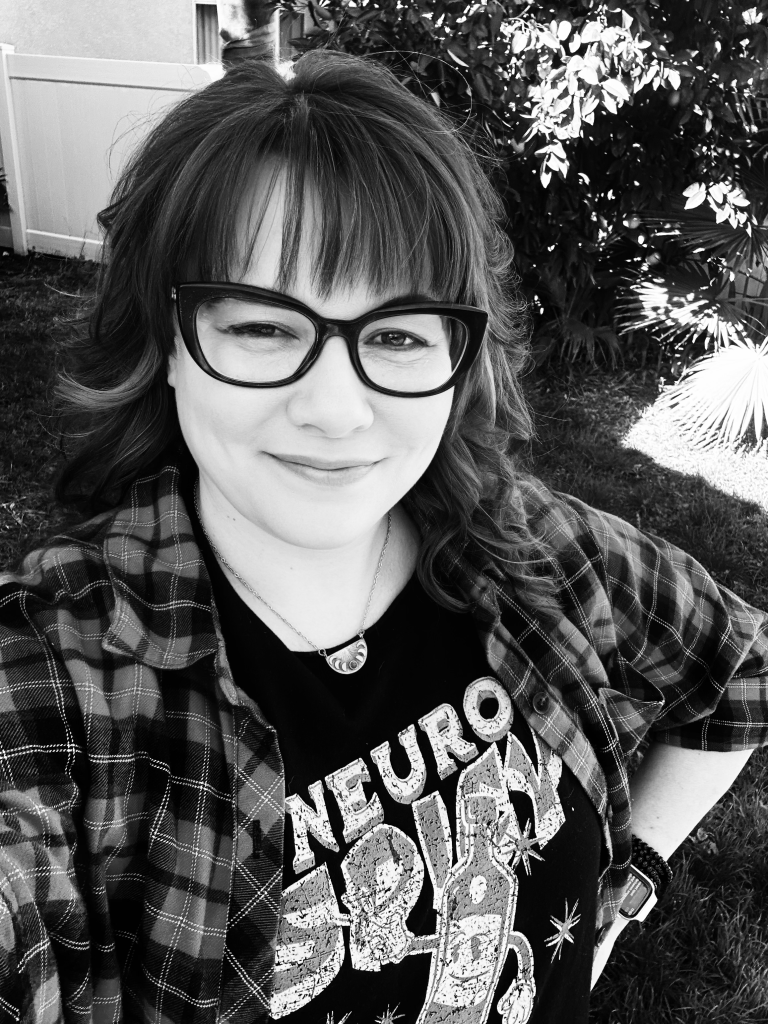
Jen Hyatt, LMFT is an author, licensed psychotherapist, podcast host, and founder of Storm Haven Counseling & Wellness in Temecula, California. Her work lives at the intersection of psychology, story, and the spaces we rarely speak out loud. She writes for those navigating identity shifts, relational complexity, and the quiet unraveling that often precedes transformation.
Through The Nerdie Therapist, Jen writes essays and hosts podcast conversations exploring rewilding, attachment, misattunement, grief, mythology, and the lifelong journey of returning to ourselves.
Jen’s approach is rooted in depth psychology, somatic awareness, and a neurodivergent-affirming lens. She is drawn to the undercurrents of human experience, the patterns beneath behavior, and the moments when something internal no longer fits the life built around it. Her work engages these themes as lived experience, moving through the body, reshaping perception, and asking for a different kind of presence.
Her work is not about becoming someone new. It is about remembering who you were before the world told you who to be.
You are not unraveling. You are shedding what was never yours.
You are not lost. You are remembering the way back to yourself.
Disclaimer
The writing shared on this website is offered for educational and reflective purposes only. It is not a substitute for therapy, medical care, or professional mental health treatment.
Although I am a Licensed Marriage and Family Therapist in California, reading this content does not establish a therapeutic relationship. The thoughts, reflections, and experiences shared here are offered as insight and perspective, not individualized clinical guidance.
If you are experiencing emotional distress, mental health concerns, or need support, I encourage you to seek care from a licensed mental health professional in your area. If you are in immediate crisis, please contact your local emergency services or reach out to the 988 Suicide & Crisis Lifeline in the United States.
This space is meant to support reflection, not replace support.


Leave a Reply