
A Story About a Door That Didn’t Quite Close, But Didn’t Stay Open Either
It began the way many turning points do, without announcement or ceremony, tucked inside an ordinary moment that only later reveals itself as anything but ordinary.
There I was, phone in hand, standing somewhere between curiosity and softness, watching something he had sent me. A video, simple on the surface, but it landed somewhere that wasn’t simple at all. It felt like someone had finally translated a language I had been speaking my whole life without ever hearing it echoed back to me quite like that.
You know the kind of moment I mean. The one where something clicks, not loudly, but with a quiet certainty that moves through your body before your mind can catch up. It feels like recognition, like finding a thread that has always been yours but suddenly visible in the light.
And because it came from him, because he was the one who placed it in my hands, it felt like an opening. Like an invitation into something shared, something that could be met and built from both sides.
So I did what anyone does when something meaningful lands in their chest instead of just passing through their mind. I followed it. I stepped toward it. I shared it.
Not halfway, not cautiously, but in the way that feels most natural to me, which is to take a moment and let it breathe, let it expand, let it become something that connects rather than something that simply exists. Because for me, connection has never been about proximity alone. It has always been about resonance, about the invisible threads that weave two inner worlds together into something shared.
And for a moment, it felt like that was what was happening.
Until it wasn’t.
The Subtle Art of Being Met… and Then Not
He responded, and on the surface, nothing seemed wrong. There was no sharpness, no overt rejection, no dramatic unraveling. Instead, there was something far more disorienting, which is the gentle closing of a door that never quite makes a sound.
He said, in essence, that not everything needs to go deep all the time, that he does not have the same capacity for that kind of depth, and that what I shared had turned into something more than what he intended.
And just like that, the moment shifted.
Not shattered, not destroyed, just… altered. Like stepping forward expecting solid ground and finding instead something softer, less certain, something that requires you to adjust your footing in real time.
Because here is where the confusion begins to weave its spell.
He had said, “Here is me.”
And I had responded, “Here is me too.”
But instead of recognition, there was a subtle pulling back, a quiet recalibration that left me standing there holding something that no longer had a place to land.
So the question rose, not as accusation but as an attempt to make sense of the terrain.
So you want me to know you, but you cut me off when I share me with you? You say meet me here, but you are not willing to do the same. You say learn me, and when I say here is me, you close the door.
This is not confusion born from overthinking. This is confusion born from misaligned signals, from a conversation where the words appear to align but the experience does not.
The Myth That Lives Inside This Moment
There is an old story about Inanna, the Sumerian goddess who descends into the underworld, passing through seven gates where she is asked to remove a piece of herself at each threshold. By the time she reaches the deepest chamber, she stands stripped of everything that once adorned her, everything that once marked her as powerful, sovereign, whole.
This myth is often framed as transformation, as the sacred act of surrender that leads to rebirth. And sometimes, that is true.
But there is another layer to this story, one that does not get spoken about as often, one that feels particularly alive in moments like this.
Not every gate is an initiation.
Some gates are simply places where you are asked to become smaller so that you can be allowed to enter.
And the difference between transformation and self-abandonment is not always obvious in the moment. It reveals itself later, in the quiet aftermath, when you notice whether you feel more like yourself or less.
Because here is the question that matters more than the story itself.
Can he meet you where you naturally live, or will you keep having to translate yourself downward to stay connected?
When the Lover Meets the Gatekeeper
There is another story unfolding here, one that does not belong to myth alone but to the living psyche.
This is the moment where the Lover meets the Gatekeeper.
The Lover says come deeper with me, not out of demand, but out of devotion to what connection can become when it is allowed to breathe and expand.
The Gatekeeper says not everything needs to open, not out of cruelty, but out of a need to regulate, to contain, to keep the world within a range that feels manageable.
Neither is wrong.
But the story only works if the gate opens sometimes.
If it never does, the Lover eventually turns that intensity inward, begins to question its own nature, begins to wonder if depth itself is the problem.
Or worse, the Lover learns to dim, to soften, to quiet the very fire that makes love feel alive in the first place, just to remain in proximity to someone who cannot step further inside.
And there is a particular grief in that kind of dimming, because it does not happen all at once. It happens slowly, through moments that seem small on their own but accumulate into something undeniable.
You find yourself reaching for conversation, for presence, for something beneath the surface. You explain, you clarify, you offer pathways into your inner world again and again.
And eventually, when those doors do not open, something in you stops trying.
Not because you no longer care, but because caring without being met becomes its own kind of exhaustion.
The Confusion of Mixed Signals
This is where the story becomes tangled.
Because he says he wants to be close. He says he wants to lay in bed and melt into you, to be near you in a way that suggests longing, tenderness, a desire for connection that feels real when spoken.
But these desires were never brought into the light while you were standing there, asking to be met.
Instead, they were offered later, framed as something you should have known, something hinted at rather than spoken.
And here is where your truth sharpens into clarity.
You do not live in hints.
You do not build connection through implication and guesswork.
You require communication, depth, emotional presence, the kind of clarity that allows intimacy to root itself in something real rather than something assumed.
Because without that, even physical closeness begins to feel like surface.
Even something as tender as cuddling can feel like proximity without presence, like being near someone without truly being with them.
And this is where the dissonance becomes harder to ignore.
He says we make love, but there is no passion.
And I don’t disagree that something is missing. I just experience the reason differently.
And I find myself sitting with that, not as a question of chemistry, but as a question of what feeds it.
Because for me, passion is not something that appears on its own. It is something that is built, slowly and consistently, through connection, through communication, through the kind of emotional presence that allows desire to feel alive rather than performative.
Without that, something essential goes missing.
Not the act itself, but the depth within it.
And I am left standing in a space where physical closeness exists, but the current that gives it meaning does not fully run.
And you have already lived enough life to know that surface is not where you are willing to stay.
Rewilding the Self: When Love Asks for More Than It Used To
The Inheritance No One Named
There is a quiet inheritance many men carry, not because they chose it, but because it was handed to them long before they knew how to question it.
It lives in the spaces where feeling should have been met but was redirected. In the moments where softness was mistaken for weakness. In the subtle shaping of a boy into someone who could function, provide, endure, but not always feel out loud.
No one sat them down and said, “Do not go deep.”
But many were never shown how.
So they learned other ways of being.
They learned how to stay steady in the external world.
How to solve, contain, move forward.
How to express care through presence, through touch, through action.
And for a long time, that was enough.
Or rather, it had to be.
When Survival Was the Structure of Love
There was a time when relationships were built more around stability than emotional depth.
Women needed partnership in ways that were not optional. Financial survival, social standing, safety. The structure itself did not require emotional expansiveness from men, because the system did not demand it.
Connection, in the deeper sense, was not always the foundation.
It was a luxury. An exception. Something that existed in pockets, not as the expectation.
So many men were never required to develop the language of their inner world, because the relationships they witnessed and inherited did not rely on it to survive.
The structure held everything in place.
What Happens When the Structure Changes
But something has shifted.
Not loudly. Not all at once.
But steadily, undeniably.
Women are no longer entering relationships out of necessity alone. They are entering from choice.
And choice changes the landscape.
Because when someone does not need to stay, what they require to want to stay becomes something else entirely.
Not just presence.
Not just care.
But connection.
Emotional depth is no longer an added layer.
It is the ground.
The Gap That Emerges
This is where the tension begins to reveal itself.
Many men are still carrying a blueprint that taught them how to love through doing, through showing up in ways that are tangible, visible, steady.
And many women are now asking for something that lives beneath that.
Access.
Expression.
The ability to step into the inner world and not just stand at the edge of it.
So you have one person offering what they were taught was love.
And another person reaching for what love has become.
Neither is wrong.
But they are not the same.
The Moment It Becomes Clear
This is the moment you found yourself in.
Standing there, not asking for more than what is real for you, but realizing that what feels essential to you may not be something he was ever taught how to access, let alone sustain.
And that realization lands in a complicated place.
Because it allows for compassion.
But it does not remove the need.
You can understand why someone cannot meet you somewhere and still know that you cannot live without that place.
Rewilding the Standard of Love
This is where rewilding enters the story.
Not as a rejection of men.
Not as a dismissal of what they were given.
But as a refusal to continue shaping yourself around a limitation that no longer fits the life you are living.
Rewilding says:
You are allowed to require depth.
You are allowed to need connection that breathes.
You are allowed to want someone who can sit with you in the places that are not immediately solvable or simple.
And you are allowed to recognize when someone cannot meet you there, even if they care, even if they try, even if they wish they could.
When Choice Becomes the Turning Point
And understanding how something was shaped does not mean it remains unchanged.
There is a point where inheritance is no longer the only story.
Where what was handed down meets what is chosen.
Because while no one is responsible for what they were never taught, there comes a moment when not learning becomes its own kind of decision.
Growth does not happen by accident.
It requires movement.
A turning toward what feels unfamiliar.
A willingness to step into parts of the self that were never fully developed.
And without that movement, something else quietly takes its place.
Not failure.
But stagnation.
Not because there is something inherently wrong, but because what once sustained connection no longer holds it in the same way.
Where Understanding Meets Truth
Because at the end of all of this, the question does not disappear.
It sharpens.
Can he meet you where you naturally live?
Not in potential.
Not in intention.
But in practice.
And if he cannot, the deeper question begins to rise.
Are you willing to return to the surface to stay connected…
or are you ready to live in a kind of love that meets you in the wild places you were never meant to leave?
When Depth Meets Its Edge
What you brought into that moment was not intensity for the sake of intensity. It was not an attempt to complicate something simple. It was the natural expression of how you experience connection, which is to feel something fully and then allow it to unfold into meaning.
For some, a moment is just a moment.
For you, a moment is an opening.
It is a place where something can be felt, explored, understood, and woven into the larger fabric of what is being created between two people. It is not about making something bigger than it is. It is about allowing it to become what it already holds the potential to be.
But his response revealed something important.
Not a flaw, not a failure, but a limit.
And limits are not inherently wrong. They simply are.
The question is not whether he should have more depth or whether you should have less. The question is what happens when one person expands into connection while the other contains it.
Because over time, that dynamic begins to shape itself into something predictable.
One person reaches.
The other regulates by pulling things back.
One person opens.
The other asks for less.
And if this pattern continues without awareness, it does not remain neutral.
It begins to teach.
If you consistently have to downshift your way of loving to stay connected, the connection is already asking you to become someone else.
When Worthiness Meets the Edge
There is something quieter that lives just beneath the surface of all of this.
It does not always speak directly. It does not announce itself in clear language. But it can be felt in the pauses, in the pulling back, in the places where something could open and instead… doesn’t.
It sounds like a question, even when it is not spoken out loud.
What if I’m not capable.
And beneath that, something even more tender.
What if I’m not worthy of this kind of love.
Not unworthy in a way that is obvious or declared, but in the quieter way it shows up. In hesitation. In not stepping fully into something that would require being seen more deeply than you are used to being seen. In the subtle retreat from a kind of connection that asks for more than what has been practiced before.
Because sometimes it is not that someone does not want depth.
It is that depth asks them to meet parts of themselves they are not sure they can hold.
And I can feel that.
I can have compassion for that.
But compassion does not change what is required for me to feel met.
And love, no matter how real it is, cannot fully live where it is not allowed to be received.
The Quiet Education of the Nervous System
The body learns faster than the mind tells stories.
It notices the micro-moments. The way your breath changes when you are about to share something real. The way your chest tightens just slightly after you do. The way you begin, almost imperceptibly, to anticipate the possibility that your fullness might not land the way you hope it will.
So you start to adjust.
Not dramatically. Not consciously at first.
You soften your language. You shorten your thoughts. You hold back the part of you that wants to take a moment and turn it over in your hands, to examine it, to feel it, to name it.
And this is where something sacred begins to slip quietly into something else.
Because what looks like adaptation can slowly become translation.
And translation, when done too often, becomes erosion.
The Line You Drew Without Asking Permission
Somewhere in the midst of that unfolding, clarity arrived, not as a polished statement but as something far more honest.
I need connection and communication to keep access to physical, or we risk staying at the surface of love. The love I have to give has more depth than open and close physical. You get access to the softness of me when you show up for me.
There is no excess in that. There is no demand that exceeds what you are built for.
There is only truth.
Because physical closeness without emotional attunement may create moments of intimacy, but it does not create the kind of connection that sustains a soul that experiences love as something layered, something alive, something meant to be entered, not just touched.
You asked for this for years. You named it clearly. You returned to it again and again, not because you were asking for too much, but because you were asking for what makes love feel real to you.
And somewhere along the way, you began to fear what you already sensed.
That he may not be able to meet you here.
And that if you forsake your needs, you are not preserving the relationship.
You are abandoning the depth that makes you who you are.
Standing Here, Untranslated
I am standing here wanting to love deeply, not in fragments, not only in moments, but in a way that feels whole and alive.
And I am starting to recognize that he may not have the capacity to receive that kind of love or exist within it with me.
That realization does not make either of us wrong.
But it does make me question whether he can truly meet me where I live.
The Question That Rewilds Everything
So the inquiry settles, not urgently, not anxiously, but with a kind of grounded clarity that does not need to rush.
Can he meet you where you naturally live, or will you keep having to translate yourself downward to stay connected?
And alongside it, the question that returns you to yourself.
Do you feel more like yourself expanding toward him, or editing yourself to remain in reach?
This is not a poetic question meant to linger.
It is a truth that organizes everything.
Because expansion feels like breath moving freely through your body, like words arriving without negotiation, like your inner world being received rather than managed.
Editing feels like hesitation, like calculation, like the quiet trimming of your own edges so that you can fit into a space that was never shaped with your fullness in mind.
And one of these leads to aliveness.
The other leads to quiet loss.
And if I were to say it plainly, without metaphor, without distance, it would sound like this.
I hear you when you say you’re not sure if you’re capable. And I don’t expect you to already have it all figured out.
But for me, this isn’t about you being perfect at it. It’s about whether you’re willing to move toward it with me.
Because the kind of connection I’m asking for is something that can be built. It grows with openness, with trying, with staying present even when it’s unfamiliar.
And I find myself wondering… is this something you want to grow into? Is what we’ve built together something you feel is worth that kind of effort?
I’m not asking for immediate change. I’m asking for willingness.
Because we are capable of great love.
Not in theory. Not in potential. But in the way love becomes something lived, something built, something that deepens over time when both people are willing to step further inside it.
But that kind of love does not happen by standing at the threshold.
It asks something more.
It asks that we step through the door.
The Wild Does Not Make Itself Easier to Understand
A forest does not rearrange itself so that every person who enters it can navigate with ease. It does not flatten its terrain or simplify its ecosystem so that it becomes more accessible to those who are not willing or able to move through its complexity.
It remains what it is.
Layered. Alive. Intricate.
Some people will walk into it and feel at home. Others will stand at the edge, appreciating it from a distance but never stepping fully inside.
And neither response changes the nature of the forest.
You are not meant to become a path that is easy to walk.
You are meant to remain a landscape that is real.
The kind of connection you are built for will not ask you to translate.
It will learn how to see.
And it will stay. And I am no longer willing to leave myself behind to be loved halfway.
Author Bio
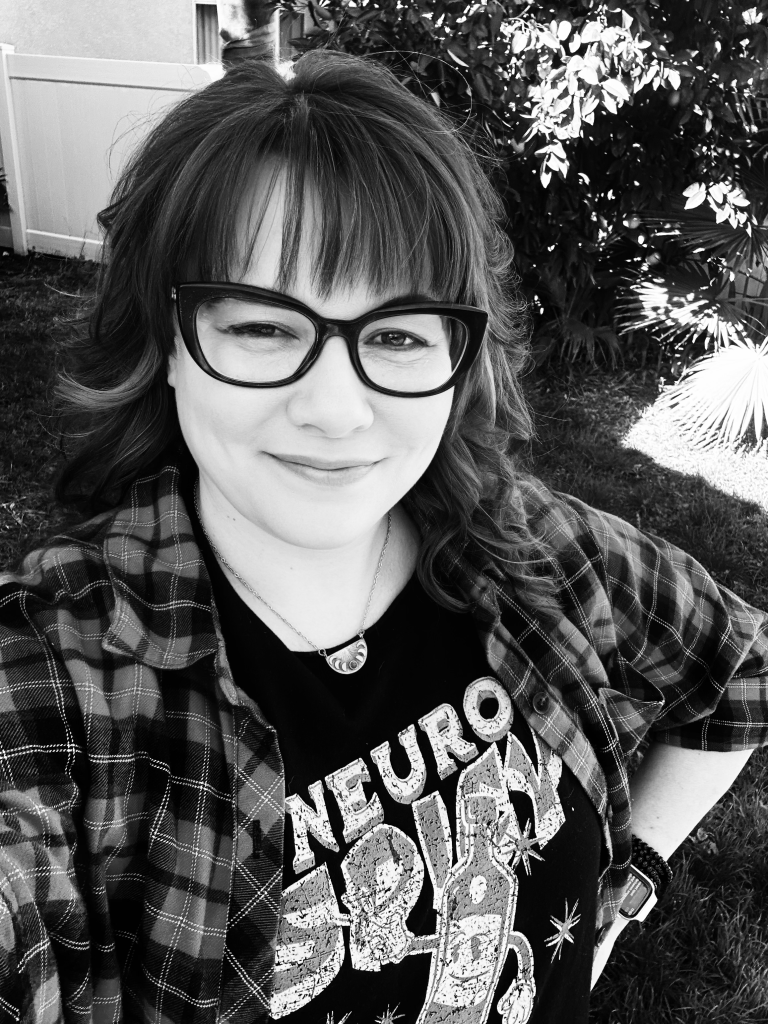
Jen Hyatt, LMFT is a licensed psychotherapist, writer, podcast host and founder of Storm Haven Counseling & Wellness in Temecula, California. Her work lives at the intersection of psychology, story, and the spaces we rarely speak out loud. She writes for those navigating identity shifts, relational complexity, and the quiet unraveling that often precedes transformation.
Jen is also the voice behind The Nerdie Therapist, where she writes blogs and hosts podcast conversations that explore rewilding, attachment, misattunement, grief, and the return to self.
Jen’s approach is rooted in depth psychology, somatic awareness, and a neurodivergent-affirming lens. She is drawn to the undercurrents of human experience, the patterns beneath behavior, and the moments where something internal no longer fits the life built around it. Her work engages these themes as lived experience, something that moves through the body, reshapes perception, and asks for a different kind of presence.
Her work is not about becoming someone new. It is about remembering who you were before the world told you who to be.
You are not unraveling. You are shedding what was never yours.
You are not lost. You are remembering the way back to yourself.
Disclaimer
The content shared on this website is for educational and reflective purposes only. It is not a substitute for therapy, medical care, or professional mental health treatment.
Although I am a Licensed Psychotherapist in California, reading this content does not establish a therapeutic relationship. The thoughts, reflections, and experiences shared here are offered as insight and perspective, not individualized clinical guidance.
If you are experiencing emotional distress, mental health concerns, or need support, I encourage you to seek care from a licensed professional in your area. If you are in immediate crisis, please contact your local emergency services or reach out to the 988 Suicide & Crisis Lifeline in the United States.
This space is meant to support reflection, not replace support.
 Rewilding Self: Notes from the In-Between
Leave a comment