
The Moment the Ground Quietly Shifts
There is a moment in love that does not announce itself with rupture. It does not come crashing through the door or demand to be named. It arrives more like a soft internal turning, a quiet click somewhere beneath language, where something in you finally settles into truth.
Nothing external may have changed. The conversation might still be unfolding. The connection may still be there, alive in its own way. But internally, something reorganizes. The reaching softens. The analyzing slows. The part of you that once stretched toward understanding begins to fold back inward, not in retreat, but in return.
It is not that you stop caring. In fact, the care remains intact, maybe even deepens. But it is no longer paired with urgency. It is no longer driven by the need to make something work, to hold something together, to ensure that love continues by effort alone.
Instead, a different knowing rises.
I can care about you… and still stay with myself.
That is the moment the path changes.
The Myth We Inherited About Love
Most of us were not taught to recognize being chosen. We were taught to recognize effort. To interpret presence. To find meaning in fragments and build coherence out of inconsistency. We learned how to stay, how to understand, how to stretch toward someone else’s inner world until we could almost feel at home inside it.
There is a kind of reverence in that. A devotion to connection. A willingness to meet another human being in their complexity.
But somewhere along the way, the devotion turns. It becomes asymmetrical. One person begins to carry more of the relational field than the other. One person becomes the translator, the bridge, the steady place where meaning is held even when it is not reciprocated in equal measure.
And because there is love, because there is history, because there is possibility, it is easy to remain there. To believe that with enough understanding, enough patience, enough presence, something will align.
But rewilding does not begin in alignment.
It begins in the recognition that alignment cannot be created through effort alone.
Descent as Initiation, Not Loss
In mythology, descent is rarely about punishment. It is not a failure of the self or a misstep in the journey. It is an initiation, a movement downward into a deeper layer of knowing that cannot be accessed from the surface.
There is a version of Persephone who is taken, who is pulled into the underworld against her will. But there is another version, quieter and less often spoken, where the descent becomes something she eventually consents to. Not because it is easy, but because it is true.
In that version, the underworld is not where she disappears.
It is where she becomes.
She learns the difference between what is given freely and what is taken through obligation. She learns what it means to hold power without abandoning softness. She learns that love cannot be sustained through one-sided tending, no matter how deep the devotion.
When she returns, she is not the same.
Not because she lost something.
But because she stopped trying to carry what was never hers alone.
Descent didn’t take me away from love.
It showed me what love could no longer ask me to carry.
The Difference Between Love and Being Chosen
There is a moment on this path where a difficult truth begins to take shape. It is not loud. It does not demand immediate action. But it lingers, steady and undeniable.
Love is not the same as being chosen.
Someone can love you. They can feel deeply for you. They can imagine a future with you, speak in language that holds vision and possibility, and still not choose you in a way that you can live inside of.
Choice is something else entirely. It is not abstract. It is not occasional. It does not require interpretation.
It shows up in movement. In consistency. In the quiet, repeated act of turning toward rather than away.
Being chosen does not feel like waiting.
It feels like being met.
The Subtle Shape of Waiting
Waiting does not always feel like stillness.
Sometimes it feels like devotion.
It looks like patience, like understanding, like giving someone space to find their way back to you. It carries the quiet hope that if you hold steady long enough, if you do not disrupt the process, something will come into alignment on its own.
And for a long time, that kind of waiting can feel noble.
It can feel like love in its most mature form.
You are not forcing. You are not demanding. You are allowing.
But there is a point, almost imperceptible at first, where waiting begins to shift.
It is no longer simply holding space.
It becomes orienting your life around the possibility of someone else’s return.
It becomes living in a kind of suspended state, where your own movement softens so that you do not get too far ahead, where your choices are made with an invisible thread of “what if.”
Not consciously. Not intentionally.
But subtly.
The body knows.
It knows when it is paused, not because it is at rest, but because it is waiting to be met.
Waiting felt like love… until I realized I had paused my own life to hold it in place.
When Waiting Becomes a Threshold
There is a moment where waiting reveals itself.
Not as something you chose consciously, but as something you have been living inside of.
You begin to notice the small ways you have held back. The conversations you did not have. The decisions you postponed. The full expansion of your life that remained just slightly contained.
All in the name of love.
All in the name of not outgrowing something that still mattered.
This is not failure. This is not weakness.
This is what happens when love is real, but the timing, the capacity, or the alignment is still in motion.
But rewilding does not ask you to abandon love.
It asks you to step out of the waiting.
I was not just loving you.
I was sustaining us.
Two Paths, Still Connected
There is a quiet truth that lives here, one that does not resolve into a clear ending or a clear continuation.
Two people can love each other deeply… and still need to walk separate paths for a time.
Not as a break. Not as a loss.
But as a necessary expansion.
There is a phrase that captures this kind of moment:
We let go of the life we planned so we can have the life that is waiting for us. Together.
From within waiting, that kind of language can feel like something to hold onto. A promise. A future. A reason to remain where you are.
But from outside of waiting, something shifts.
It becomes less about holding onto “together” as a guarantee, and more about allowing “together” to emerge if, and only if, both people arrive there fully.
Not pulled.
Not paused.
Not partially present.
But whole.
We are not losing each other.
We are finding ourselves… and seeing if we meet again there.
When the Body Catches Up to the Truth
There is a point where the mind has already understood what is happening, but the body has not yet followed. The thoughts are clear. The insight is present. But the nervous system is still oriented toward the connection, still scanning, still reaching in subtle ways that are almost invisible until they are not.
And then something shifts.
The body exhales.
The urgency dissipates.
My body stopped reaching, even though my heart was still loving.
The need to explain, to clarify, to make sure the other person understands begins to fall away.
Not because the truth is less important, but because it no longer needs to be proven.
This is what regulation feels like in real time. Not the absence of feeling, but the presence of steadiness.
You are no longer trying to move the relationship forward.
You are allowing it to reveal itself.
This wasn’t about whether you cared.
It was about whether you could meet me.
Rewilding the Relational Self
Rewilding, in this context, is not about leaving love behind. It is not about detaching or numbing or convincing yourself that you no longer care.
It is about returning to an internal orientation that does not require self-abandonment in order to sustain connection.
It is the shift from shaping yourself around someone else’s capacity to allowing their capacity to stand on its own, unedited, unenhanced, uncarried.
There is a quiet sentence that begins to take root here, one that does not need to be spoken out loud to be true:
I meet what meets me.
This is not a withdrawal of love.
It is a recalibration of where that love is held.
There is a deeper truth that often goes unnamed here.
For a long time, the connection may have been sustained not only by love… but by effort. By reaching. By translating. By quietly carrying the emotional weight of what was not being met in equal measure.
Rewilding interrupts that pattern.
It is the moment you realize you are no longer willing to bridge the distance alone.
Not as a punishment. Not as a withdrawal.
But as a return to something more honest:
I want to be met… not managed.
I didn’t stop loving you.
I stopped carrying what required both of us.
The Space Between Vision and Reality
Sometimes, love speaks in vision. It reaches forward into what could be, into what is waiting, into a shared sense of something meaningful that has not yet fully taken form.
There is beauty in that. There is hope in that. There is a kind of intimacy in imagining a future together, even when the present is uncertain.
But rewilding introduces a second lens.
It asks not only what is imagined, but what is lived.
Because “together” is not something that exists solely in vision. It is something that must be enacted, again and again, in the small, consistent movements of showing up, responding, engaging, choosing.
Without that, vision remains vision.
And the body knows the difference.
I didn’t need to pull us forward anymore.
I needed to see what would move toward me on its own.
Staying Rooted Without Closing
There is a way to hold love that does not require you to close your heart in order to protect it. It does not ask you to withdraw or to become distant or to harden against what you feel.
Instead, it asks you to remain.
To stay rooted in your own path, your own rhythm, your own sense of self, while allowing the other person to do the same.
This kind of stance is quiet but firm. It does not demand. It does not chase. It does not attempt to bridge the gap unilaterally.
It simply holds:
I care about you.
I love you deeply.
I am here.
I am not leaving myself to stay connected to you.
If we meet, we meet.
And if we do not, I remain.
This is not a turning away.
It is not a decision to leave, or to close what exists between us.
It is a different way of holding the connection.
One where I am no longer reaching to sustain it…
but I am still here, still loving, still open to meeting again from a place that is mutual and fully chosen.
The Threshold of Being Chosen
At some point, the question shifts.
It is no longer about whether love exists. That has already been established.
It becomes about whether that love is lived in a way that feels like being chosen in relationships.
Not occasionally. Not conditionally. Not only in moments of clarity or emotional openness.
But in the steady, ongoing act of presence.
This is where many people turn back. Where they soften their standard, where they make exceptions, where they continue to bridge in hopes that something will eventually align.
But rewilding does not move backward.
It moves deeper into truth.

The Return to Self as the Beginning of Love
There is a quiet kind of peace that emerges when you stop trying to carry what requires two people.
It is not the peace of resolution, because not everything has been resolved.
It is not the peace of certainty, because the future is still unknown.
It is the peace of alignment.
The peace of knowing that you are no longer negotiating with your own needs in order to maintain connection.
The peace of standing in a love that includes you.
Because in the end, being chosen is not something you convince another person to do.
It is something you recognize… or you don’t.
And when you finally stop reaching for what is not reaching back, you create space for something else to emerge.
Something mutual.
Something steady.
Something that does not need to be pulled closer in order to stay.
And if “together” is part of what is waiting…
it will not be because one of you stayed behind.
It will be because you both walked forward, fully, into yourselves…
and chose each other from there.
If we meet again, it will not be because I stayed.
It will be because we both walked forward.
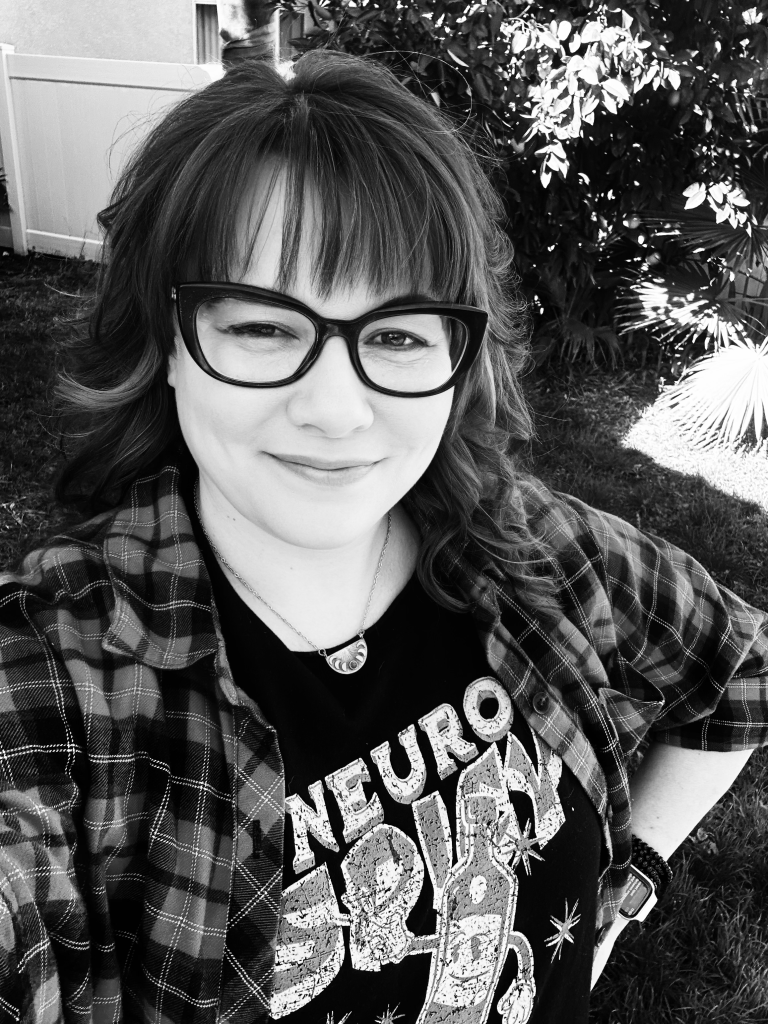
Author Bio
Jen Hyatt, LMFT is a licensed psychotherapist, writer, podcast host and founder of Storm Haven Counseling & Wellness in Temecula, California. Her work lives at the intersection of psychology, story, and the spaces we rarely speak out loud. She writes for those navigating identity shifts, relational complexity, and the quiet unraveling that often precedes transformation.
Jen is also the voice behind The Nerdie Therapist, where she writes blogs and hosts podcast conversations that explore rewilding, attachment, misattunement, grief, and the return to self.
Jen’s approach is rooted in depth psychology, somatic awareness, and a neurodivergent-affirming lens. She is drawn to the undercurrents of human experience, the patterns beneath behavior, and the moments where something internal no longer fits the life built around it. Her work engages these themes as lived experience, something that moves through the body, reshapes perception, and asks for a different kind of presence.
Her work is not about becoming someone new. It is about remembering who you were before the world told you who to be.
You are not unraveling. You are shedding what was never yours.
You are not lost. You are remembering the way back to yourself.
Disclaimer
The content shared on this website is for educational and reflective purposes only. It is not a substitute for therapy, medical care, or professional mental health treatment.
Although I am a Licensed Psychotherapist in California, reading this content does not establish a therapeutic relationship. The thoughts, reflections, and experiences shared here are offered as insight and perspective, not individualized clinical guidance.
If you are experiencing emotional distress, mental health concerns, or need support, I encourage you to seek care from a licensed professional in your area. If you are in immediate crisis, please contact your local emergency services or reach out to the 988 Suicide & Crisis Lifeline in the United States.
This space is meant to support reflection, not replace support.
 Rewilding Self: Notes from the In-Between
Leave a comment