
The Myth We Were Given About Love
There is a story many of us were raised inside, though no one ever named it out loud.
Love, we were told in a thousand quiet ways, is the act of staying.
When the fire comes, you do not step back.
You step closer.
You become the steady one.
You hold the torch when the other cannot see.
You walk through the underworld hand in hand, refusing to let go even when the path disappears beneath you.
It is a beautiful story.
It is a loyal story.
It is a story that builds homes out of devotion.
And for a long time, I lived inside it.
I believed that love meant becoming a place someone could return to when they were lost.
I believed that presence could anchor another person back to themselves.
I believed that if two people were willing, nothing would pull them apart for long.
And then, one day, the myth changed.
Not loudly.
Not with destruction.
Just a quiet closing of a door I did not know we were standing inside.
The Day the Path Split
There is a moment in certain myths where two travelers reach a fork in the road.
Until that point, the journey has been shared. The steps have been matched. The direction has been mutual.
And then, without warning, one path turns inward.
In my story, he did not turn toward me when the ground shifted beneath him.
He turned away.
Not in cruelty.
Not in absence of care.
But in something far more disorienting.
He said he did not know who he was.
He said he needed to find himself.
And in doing so, he stepped beyond the reach of where I could follow.
No map.
No tether.
No shared descent.
Just distance where there had once been presence.
In myth, this is the moment where the heroine calls after the one she loves, expecting him to turn back.
Expecting him to remember the story they were in.
But he does not turn.
And suddenly, she is no longer in the myth she thought she was living.
Orpheus and Eurydice: The Space Between
There is another story that lives here.
In the myth of Orpheus and Eurydice, love descends into the underworld in an attempt to reclaim what has been lost.
Orpheus does not accept separation.
He goes after her.
He crosses the threshold.
He sings his way through death itself.
And he is given a single condition.
Walk forward.
Do not look back.
Trust that she is behind you.
But love, when stretched across distance, does not always trust what it cannot see.
He turns.
And in that turning, he loses her.
For a long time, I thought this myth was about doubt.
About the cost of looking back.
Now I understand something else.
Some paths cannot be walked together, even in love.
And some forms of reaching, even when rooted in devotion, break the very thing they are trying to hold.
Persephone and the Underworld of Truth
There is a deeper myth still.
The story of Persephone is often told as a tale of being taken.
But the underworld is not simply a place of darkness.
It is a place where illusion cannot survive.
And once you have lived there, you do not return unchanged.
I did not feel taken into the underworld.
I felt like I arrived there slowly, without realizing when the ground beneath me had shifted.
The connection I knew was no longer accessible in the same way.
The presence I relied on was no longer something I could reach for.
And in that absence, something else began to emerge.
Not clarity.
Not resolution.
Truth.
Truth about how I love.
Truth about where I overextend.
Truth about the quiet places where I have learned to stay even when I am no longer being met.
The underworld does not create these truths.
It reveals them.
The Myth of the Waiting Woman
There is an older story than all of these.
The woman who waits.
She keeps the fire alive.
She holds the place.
She believes that if she stays steady enough, he will find his way back.
There is devotion in that story.
There is beauty in that kind of loyalty.
But there is also a question myth does not always ask:
What happens to her while she waits?
Does she remain whole?
Or does she slowly disappear into the space he left behind?
This is where my story turned.
Because I could feel that version of myself rising.
The one who would hold the connection alone.
The one who would remain open no matter how far he stepped away.
And for the first time, something in me did not follow.
The Boundary Between Love and Self-Abandonment
There is a line that is not often named in stories about love.
A line between devotion and disappearance.
I could feel it in my body before I had language for it.
The urge to reach.
The pull to close the distance.
The instinct to become the steady place he could return to.
And beneath that, something quieter.
A knowing.
That if I crossed that line again, I would not just be loving him.
I would be leaving myself.
So I stayed.
Not in distance.
Not in coldness.
But in place.
A different kind of staying.
The kind that does not chase.
The kind that does not collapse.
The kind that does not abandon itself in the presence of uncertainty.
The Fear of the Second Disappearance
There is something no myth prepares you for.
Not the descent.
Not the separation.
But what happens if the path opens again.
Because the body remembers what the mind tries to soften.
It remembers how quickly something steady became uncertain.
How presence became absence without warning.
And so even if the door reappears…
even if the distance closes…
there is something new standing beside love.
Not doubt.
Not distrust.
Awareness.
A knowing that love, on its own, did not prevent the disappearance.
And that if I return without something being different,
I do not return to connection.
I return to the possibility of losing myself again inside it.
The Door That Must Be Opened
In every myth, there is a threshold.
A crossing point that cannot be forced from one side alone.
This is where I stand now.
I cannot open the door he closed.
I cannot walk a path he has stepped away from.
I cannot rebuild connection from both sides at once.
If there is a return, it will not come from reaching across the distance.
It will come from him finding his way back to the threshold
and choosing to open it differently than before.
Not just with longing.
Not just with love.
But with the capacity to stay.
And even then…
Returning to the threshold is not the same as being welcomed through it.
Because something in me now stands at that doorway
not only with love…
but with memory.
Memory of what it felt like when the door closed without warning.
Memory of what it meant to lose orientation inside something I believed was steady.
I do not know if I will be standing there in the same way if he returns.
Not because I no longer care.
But because I am learning to ask a different question than I once did.
Not “Do I love him?”
But “Am I safe to love him here?”
Rewilding the Myth of Love
Rewilding is not the rejection of love.
It is the refusal to disappear inside it.
It is the return to a form of connection that includes you.
Not as the one who holds everything together.
Not as the one who waits indefinitely.
But as someone who remains whole, even when the story shifts.
I am still in the middle of this myth.
There is no ending yet.
No resolution to place at the edge of this chapter.
Only this:
I am no longer living inside the belief that love alone is enough to sustain connection.
Love must also be met.
Held.
Returned.
And if it is not, then the most sacred act is not reaching further.
It is staying with yourself as the ground reshapes beneath you.
What Remains at the Threshold
There is more to this story.
There may be a return.
But if there is, it will not be a return to what was.
It will be a meeting at the threshold between who we were
and who we have become in the absence of one another.
And I do not know yet what I will do when I stand there.
I only know this:
I will not step back into something that asks me to question my own ground.
I will not rebuild connection in a place where I cannot feel safe to remain.
Love is still here.
But now, it stands beside something that was not as clear before.
Discernment.
And if he returns, it will not be enough that he finds his way back to me.
He will need to meet me in a place where I no longer abandon myself to stay.
If You Find Yourself in This Story
If you are standing at your own threshold
if someone you love has stepped beyond your reach
if the story you believed in no longer holds in the same way
let this be something you can carry:
You are not being asked to love less.
You are being asked to love in a way that does not cost you your place in your own story.
Stay.
Not with what has left.
But with what remains.
With yourself.
Author Bio
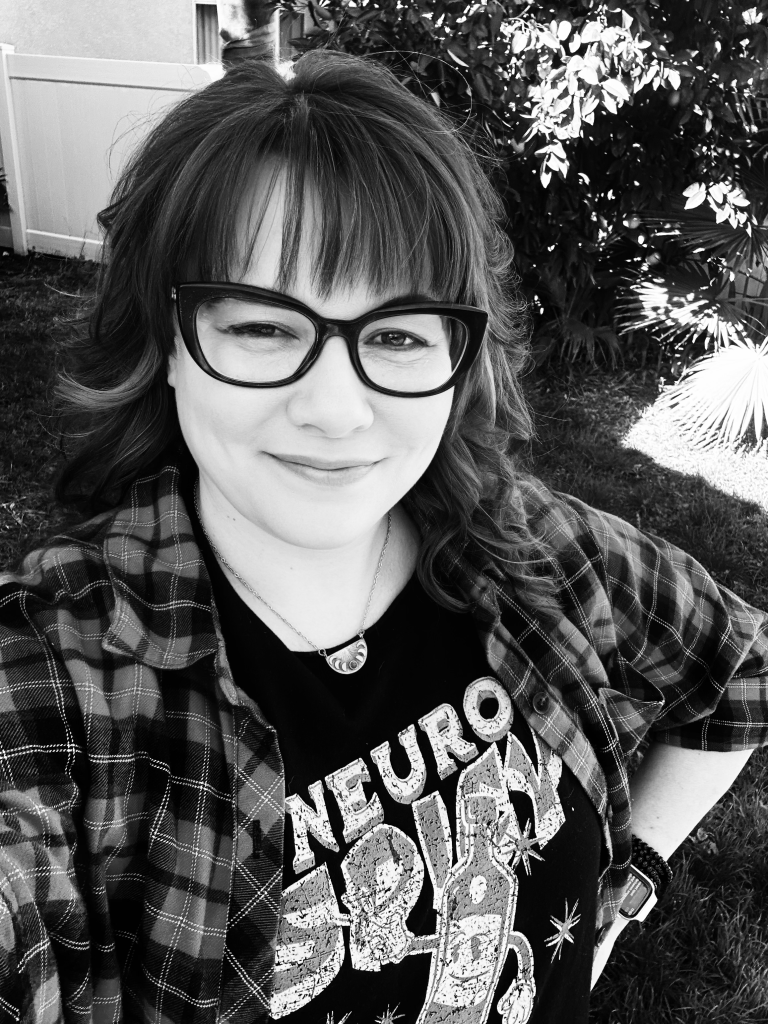
Jen Hyatt, LMFT is a licensed psychotherapist, writer, podcast host and founder of Storm Haven Counseling & Wellness in Temecula, California. Her work lives at the intersection of psychology, story, and the spaces we rarely speak out loud. She writes for those navigating identity shifts, relational complexity, and the quiet unraveling that often precedes transformation.
Jen is also the voice behind The Nerdie Therapist, where she writes blogs and hosts podcast conversations that explore rewilding, attachment, misattunement, grief, and the return to self.
Jen’s approach is rooted in depth psychology, somatic awareness, and a neurodivergent-affirming lens. She is drawn to the undercurrents of human experience, the patterns beneath behavior, and the moments where something internal no longer fits the life built around it. Her work engages these themes as lived experience, something that moves through the body, reshapes perception, and asks for a different kind of presence.
Her work is not about becoming someone new. It is about remembering who you were before the world told you who to be.
You are not unraveling. You are shedding what was never yours.
You are not lost. You are remembering the way back to yourself.
Disclaimer
The content shared on this website is for educational and reflective purposes only. It is not a substitute for therapy, medical care, or professional mental health treatment.
Although I am a Licensed Psychotherapist in California, reading this content does not establish a therapeutic relationship. The thoughts, reflections, and experiences shared here are offered as insight and perspective, not individualized clinical guidance.
If you are experiencing emotional distress, mental health concerns, or need support, I encourage you to seek care from a licensed professional in your area. If you are in immediate crisis, please contact your local emergency services or reach out to the 988 Suicide & Crisis Lifeline in the United States.
This space is meant to support reflection, not replace support.
 Rewilding Self: Notes from the In-Between
Leave a comment